Fortunately, when I was all but five years old, my father put a hammer and saw in my hands and built us kids a work bench. What it taught me more than anything was not to be afraid of tools. These early lessons have proved beneficial in my life as when I decide I want to build something that will prove functional in my life, I can generally do it.
I have been using worm castings for quite some time and recently decided that rather than continue to buy them, I should start generating my own. So, I set out to build my own worm bin. Many suggestions I found online were to modify plastic storage containers, which is an easy solution, but I am trying to move away from plastic in all areas of my life. Wood seemed like a much more natural solution – literally.
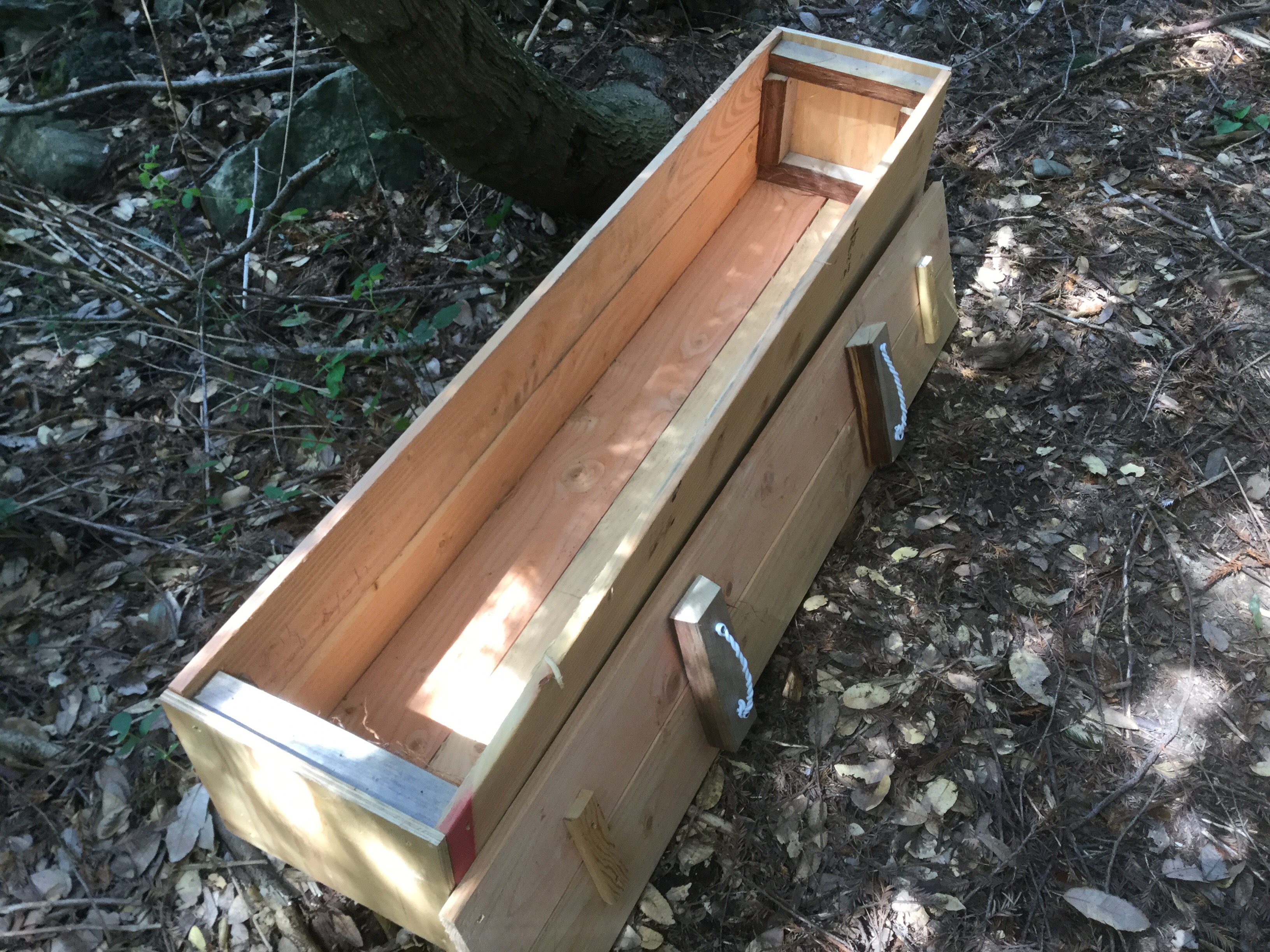
I used ideas for plans from a couple of different places/people and modified them for cost and ease of materials. I used 1″x 6″ fir instead of plywood mostly because of my inability to haul a sheet of plywood. I was going to get fence boards which are often quite cheap, but they were out of stock. They did have redwood which was a little spendy and I’ve also read that worms don’t like the acidity of redwood sawdust (which I have plenty of access to), so I figured maybe they wouldn’t like a redwood bin either. They did have 20 ft lengths of 1″x6″ which they offered to cut for no cost, so I got two boards cut in four pieces each. They were easy to haul and nice to have pre-cut = less work. I did wind up using some odd shape redwood blocking to build the internal frame which didn’t consist of much. I have a friend (neighbor) who mills lumber, so I’ve been able to get my hands on what he considers scrap – misshapen 2x4s etc. I also used some scrap plywood to cap the ends. The bin is screwed together with a slight gap in between the boards to allow for drainage and airflow. I made handles out of old clothesline scrap and propped the box up off the ground on river rocks.
I made it in a long trough so that I can add compost/paper/cardboard lengthwise causing the worms to migrate from one end of the bin to the other leaving nice rich vermi-compost (worm castings) behind in their wake. When we get to the end of the bin, I’ll double back reaping the benefits of their work as they go.
The whole project cost me $19. Considering that a one cubic foot bag of worm castings costs over $20, I think it will pay for itself quickly.
I’m happy with how it turned out. 🙂


 Remember the Birds
Pingback: New Worm Bin – New Life for my Garden – Still Life With Dharma – WORLD ORGANIC NEWS
Thanks for including me. All my best to you… Happy Gardening!
LikeLike
Pingback: She’s Back – Still Life With Dharma